


Key takeaways
- A top mobile app development company combines business understanding, user-centric design, and proven engineering instead of relying on code alone.
- Custom solutions, secure architecture, and well-chosen integrations help an app scale without costly rebuilds.
- Portfolios, case studies, and a transparent process show whether a team can deliver real results.
- Clear pricing, code ownership, and post-launch support protect your investment after release.
- When shortlisting a mobile app development company in Chennai, ask every team the same questions and compare the answers side by side.
What a Top Mobile App Development Company Actually Delivers
A top mobile app development company does more than write code. It turns a business goal into an app people keep using, and it stays accountable after launch. That difference is easy to miss, because most agencies describe themselves in similar terms.
Apps rarely fail because of syntax errors. They fail because the product solved the wrong problem, confused its users, or could not handle growth. The ten qualities below help you spot teams that avoid those outcomes, covering business understanding, design, engineering, security, pricing, and support.
Use the list as a checklist when you shortlist a mobile app development company. Ask each candidate the same questions, then compare how specific the answers are. Vague answers usually point to limited experience.
1. Clear Vision and Business Understanding
How a Top Mobile App Development Company Starts a Project
The real difference begins before any code is written. Strong teams ask about your customers, the problem the app should solve, and how success will be measured. If a partner jumps straight into estimates without those answers, the product may ship on time and still miss the business goal.
Good planning also controls scope. When every feature maps to a goal, it becomes easier to say no to ideas that add cost without adding value. Milestones stay realistic, and delays become rarer. For a deeper evaluation framework, see how to choose mobile app development company in our dedicated guide.
Both sides need the same picture. You want more sales, loyalty, or efficiency. The developers want to ship something that works in the real market. When those goals align, the app becomes a business asset instead of a technical deliverable.
2. User-Centric Design Approach
Why Usability Testing Matters Before Launch
Well-coded apps still fail when people cannot figure them out. Too many buttons, slow loading screens, or unclear icons push users to uninstall within minutes. A strong team puts navigation, layout, and interaction design first, then validates them with real users.
That usually means wireframe reviews, clickable prototypes, and short usability sessions before development is finished. Even a handful of test sessions can expose confusing flows early, when they are cheap to fix. Small tests will not catch everything, so good teams keep collecting analytics and feedback after release. Practical mobile app UI/UX design tips can help you judge whether a design team works this way.
When design follows this discipline, the app feels simple even if the features are not. Users return more often, recommend it to others, and trust the brand. Design is the foundation that decides whether the app grows or stalls, not a finishing touch.
3. Proven Technical Expertise
Technical Skills a Top Mobile App Development Company Should Show
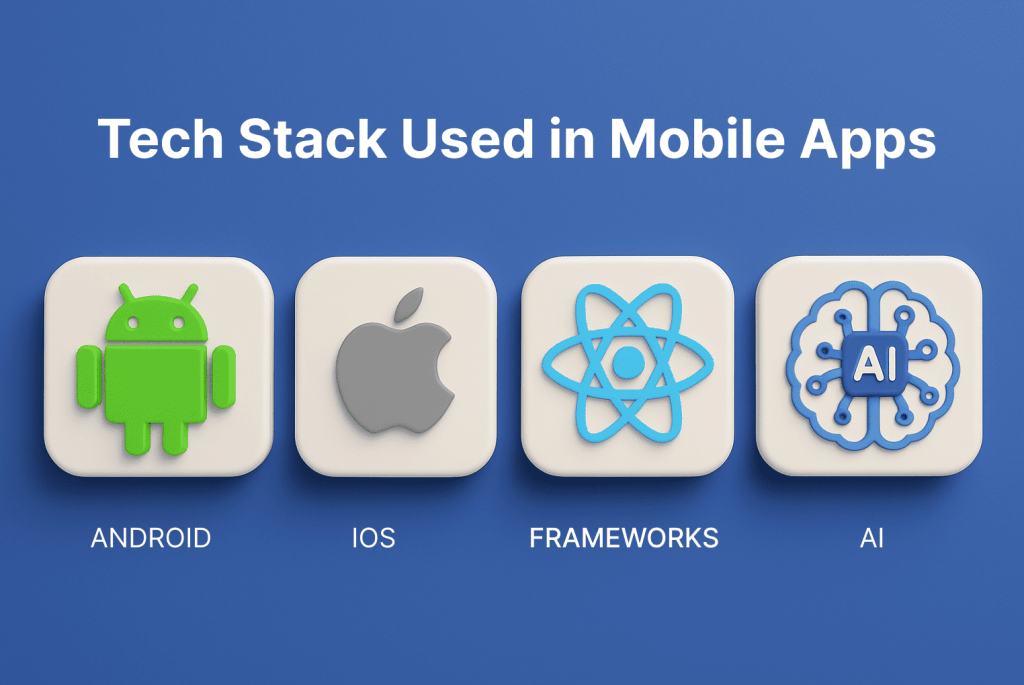
Behind every dependable app is a team that knows its tools. Look for hands-on experience with native Android and iOS development, cross-platform frameworks such as Flutter and React Native, and backend architecture that balances speed, security, and scalability. A partner that covers both platforms, like an ios and android app development company, also saves you from managing two separate vendors.
Framework choice deserves a straight answer. For many products, cross-platform development saves time and budget without hurting quality. Native development is usually the better fit when you need heavy graphics, deep hardware access, or the best possible performance. A trustworthy team explains that trade-off for your project instead of pushing the stack it prefers.
Technical depth shows up after launch. Teams with proven methods deliver smoother releases, fewer crashes, and apps that connect to other systems without surprises.
4. Custom Solutions Over Generic Templates
When Custom Mobile App Development Is Worth It
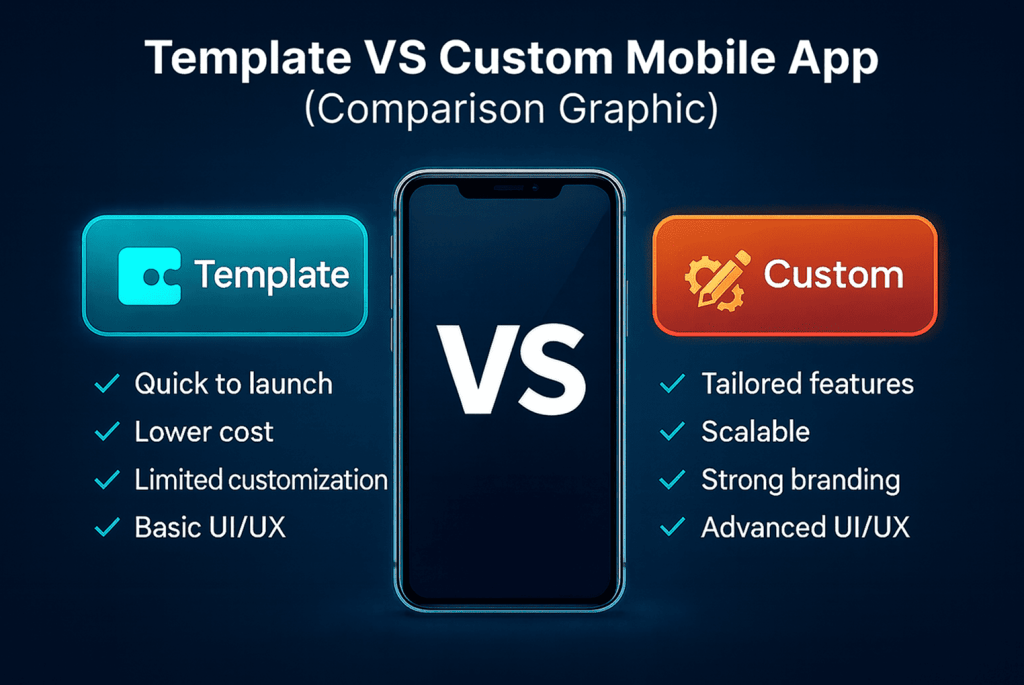
Ready-made templates look attractive because they save time at the start. They are reasonable for validating an idea or building a simple internal tool. The limits appear when your business needs features the template never anticipated.
Custom mobile app development lets you design around your own workflow and customers. A business selling handmade products may need personalized product filters. A logistics firm may need live tracking and driver dashboards. A template cannot stretch that far without expensive workarounds.
The trade-off is cost and timeline, since custom work takes longer to build than a template. For apps that must set your brand apart or grow with your user base, that investment usually pays back by avoiding a rebuild. Choose a partner who will tell you honestly when a simpler approach is enough.
5. Integration with Modern Technologies
CRM, Ecommerce, and AI Features in Mobile Apps
Apps age quickly when they ignore new tools, but adding technology for its own sake wastes budget. The right partner connects modern capabilities to a specific business need.
CRM mobile app development is a clear example. Built-in CRM features let sales teams manage leads, update deals, and handle support requests on the go. That improves internal workflows and strengthens client relationships. Ecommerce is another strong use case. Mobile shoppers expect secure payment gateways, personalized recommendations, and inventory that stays in sync with your store.
AI features are becoming common too, including personalized content, predictive search, and voice-enabled navigation. Their value depends on quality data and a clear use case. A capable provider of mobile app development services will test whether an AI feature solves a real problem before building it.
When these pieces fit together, the app works as a growth platform for sales, marketing, and customer engagement at once.
6. Security and Data Protection
Security Checks a Top Mobile App Development Company Should Run
Users hand apps their personal details, payment information, and sometimes health or location data. A single breach can damage trust faster than any bug. That makes security a selection criterion, not a final-stage checklist.
Ask how the team handles authentication, encryption of data in transit and at rest, secure API design, and dependency updates. Penetration testing before launch is worth requesting for any app that stores sensitive data. Industries such as healthcare and payments also carry compliance requirements, so confirm that the team has worked with the standards that apply to you. The principles in Mobile App Security Best Practices give you a useful baseline for these questions.
No team can promise zero risk. A disciplined one reduces it and documents how it responds when issues appear.
7. Strong Portfolio and Case Studies
How to Read a Mobile App Development Portfolio
Past work speaks louder than promises. A portfolio shows the industries served, the complexity handled, and how the team solved problems. Look for projects similar to yours in size, user base, and integrations, not just attractive screenshots.
Case studies go deeper. They explain the client’s challenge, the approach taken, and the outcome. You might see how a business improved customer engagement through a loyalty app, or how a retailer planned stock with smarter inventory tracking. Be cautious when a case study offers only vague claims with no context. Ask for live app store links and, where possible, a short call with a former client.
Buyers comparing a mobile app development company in India should apply the same checks, since portfolio quality varies widely across the market. A varied set of finished projects and satisfied clients shows the team can adapt to different needs without lowering standards.
8. Transparent Development Process
What the Process of a Top Mobile App Development Company Looks Like
Trust grows when a company shows how it works. Expect a roadmap that covers discovery, wireframing, design, development, testing, and deployment, with clear deliverables at each stage. Short sprints with regular demos let you see progress and correct course early.
Without that structure, timelines and costs drift, and misunderstandings lead to rework. A defined process keeps both sides aligned and leaves room for creative problem solving when surprises appear.
Communication matters just as much as the plan. Ask who your point of contact will be, how often you will get updates, and which tools the team uses to track work. Predictable delivery and steady communication are two of the practical benefits of hiring a mobile app development company with an established process.
9. Clear Pricing and Engagement Terms
How a Top Mobile App Development Company Handles Cost and Scope
Quotes for the same app can differ widely because teams assume different scopes. A trustworthy company breaks its estimate into phases or features, so you can see what drives cost. Be wary of a very low quote with a vague scope, since the gap often returns later as change requests.
Engagement models matter too. Fixed-price contracts suit projects with a well-defined scope. Time-and-material or dedicated team models fit products that will change as you learn from users. Neither is always better, and the right one depends on how certain your requirements are.
If budget is tight, starting small is often wiser than cutting quality. Building MVP Mobile Apps around core features lets you test demand before investing in the full product. Also confirm in writing who owns the source code, designs, and developer accounts after delivery.
10. Post-Launch Support and Scalability
Maintenance and Growth Planning After Release
Launch is the start of the real work. Users behave in unexpected ways, devices vary, and new iOS and Android versions arrive every year and can break features that worked before. Reliable partners offer bug fixes, security patches, compatibility updates, and new releases. Dedicated App Maintenance Services are a good sign that a team plans to stay involved.
Scalability needs planning from the start. As downloads grow, performance can slow if the architecture was not built for it. Teams that design flexible backends can add features, integrations, and security improvements without rebuilding. Predictive analytics, automated testing, and performance monitoring help catch problems early, before reviews suffer.
Ask what support terms are included, how fast critical issues are handled, and what ongoing costs to expect. A partner who answers clearly saves you from expensive rebuilds later.

Choosing the Right Top Mobile App Development Company for Growth
Choosing a partner can feel overwhelming, because many companies promise results and few deliver lasting value. The best one acts as an extension of your team, helping you plan, build, and grow your product.
Base the decision on clear criteria: business understanding, user-centric design, technical expertise, security, transparent pricing, and ongoing support. Then check those claims against case studies, client references, and post-launch performance. If you prefer working with a team in your own city and time zone, a mobile app development company in Chennai can make workshops and day-to-day collaboration easier.
Shortlist three companies, ask each the same questions from this guide, and compare answers rather than sales decks. The right choice listens, adapts, and delivers with transparency. Your app is a tool for growth, efficiency, and customer loyalty, so pick the partner who treats it that way.
FAQs About Choosing a Top Mobile App Development Company
What defines a top mobile app development company?
A top mobile app development company combines business understanding, strong design, proven engineering, security discipline, and dependable post-launch support. It can show relevant case studies, explains its process and pricing clearly, and treats your app as a long-term product rather than a one-time delivery.
How long does it take to build a mobile app?
It depends on scope. A focused MVP often takes a few months, while apps with complex integrations, multiple user roles, or heavy backend work can take considerably longer. Treat any firm timeline given before a discovery phase with caution, because reliable estimates need defined requirements.
Should I choose native or cross-platform development?
Cross-platform frameworks such as Flutter and React Native suit many business apps because one codebase serves both iOS and Android. Choose native when you need maximum performance, advanced graphics, or deep hardware features. A good partner recommends based on your features and budget, not its own preference.
How can I verify a top mobile app development company’s claims?
Check live apps in the App Store and Google Play, ask for case studies with context, and speak with at least one past client. Request a sample project plan and review how the team answers technical questions. Specific, consistent answers are a better signal than polished presentations.
Who owns the source code after the app is built?
You should. Confirm in the contract that source code, design files, and developer accounts transfer to you once payment is complete. Also ask about third-party licences and open-source components, so you know what obligations come with them.
What does post-launch support usually include?
Typically bug fixes, security patches, compatibility updates for new iOS and Android versions, performance monitoring, and minor feature updates. Scope and response times vary, so ask for support terms in writing, including how quickly critical issues are handled.