
Loading...

Connect production teams, machines, inventory, quality processes, maintenance, and enterprise systems through scalable manufacturing apps, operational dashboards, real-time data, cloud infrastructure, and intelligent workflows.






Every manufacturing app we build starts with how work actually moves through a plant, not a generic feature list.

Operators, supervisors, and maintenance teams get factory floor tools on handheld devices instead of being tied to a fixed terminal.

Live dashboards show production status, machine output, and work order progress as they change, not after a shift ends.

Predictive maintenance, quality inspection, and demand forecasting are built into the platform where they add measurable value.

Manufacturing apps connect cleanly with ERP, MES, and CRM systems already running the business, rather than working around them.
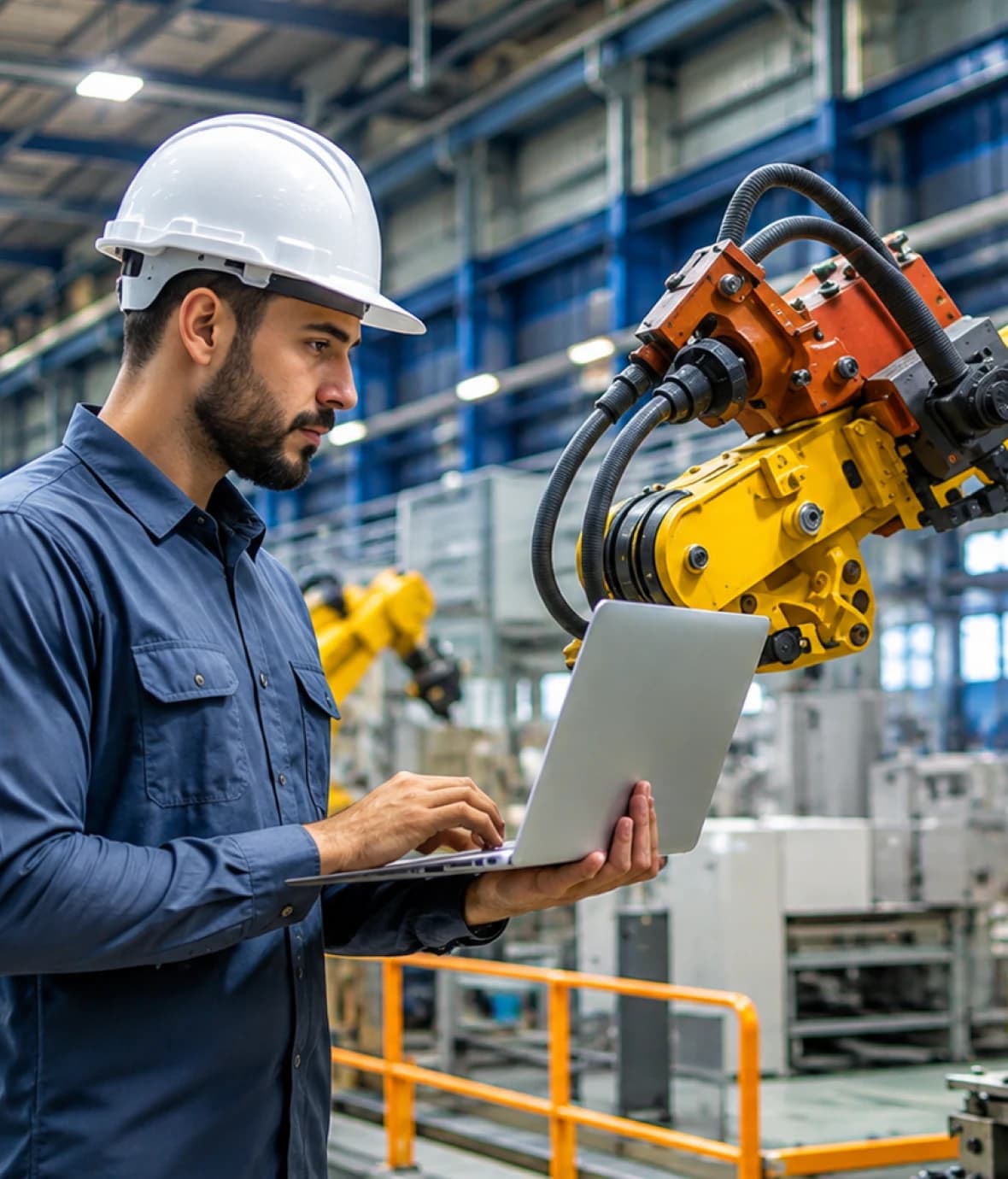
Manufacturing operations rarely need a single app. They need a connected set of tools that cover the floor, the warehouse, and the systems that tie production to the rest of the business.
Centralize work orders, shift schedules, machine assignments, and floor-level communication in one system operators actually use.

Track output, downtime, and cycle times against production targets in real time, with alerts when a line falls behind.

Manage receiving, put-away, picking, and stock movement with barcode and RFID scanning built for warehouse floors, covering the that reduce manual counting and misplaced inventory.

Digitize inspection checklists, defect logging, and non-conformance reporting so quality issues are caught before they reach the next stage.

Schedule preventive maintenance, log equipment history, and route work orders to the right technician before a breakdown stops a line.

Keep raw material levels, reorder points, and supplier orders synced with actual production consumption instead of manual estimates.

Extend existing ERP systems with mobile-friendly interfaces for tasks that were never practical to run from a desktop terminal.

Give shift workers and supervisors tools for attendance, task assignment, safety checklists, and shift handovers on the devices they already carry.

Manufacturing software rarely stops at a mobile app. It usually needs to reach into ERP data, feed dashboards, trigger approvals, and support workforce tools across the whole operation.

We start by mapping how production, quality, maintenance, and warehouse work actually flows today, including the workarounds teams have built around gaps in current systems.
Purpose-built applications for factory floor use, covering work orders, inspections, maintenance logs, and inventory movement on mobile and tablet devices.
For plants running ERP, MES, and CRM systems together, we build Enterprise App Development work that connects dashboards, approval workflows, and workforce applications into one coherent system.
For manufacturers managing more than one facility, we build subscription-based industrial platforms on an Enterprise SaaS Platform model, with centralized reporting across every plant from a single account.
Predictive maintenance, demand forecasting, quality inspection, and production optimization are built using our AI Software Development Services, applied to machine and production data through our AI Application Development Services rather than added as a bolt-on feature.
Older plant systems and spreadsheet-based processes are modernized in stages, replacing manual steps with connected tools without disrupting production during the transition.
Share your production, workforce, equipment, and integration needs to shape a practical manufacturing roadmap.
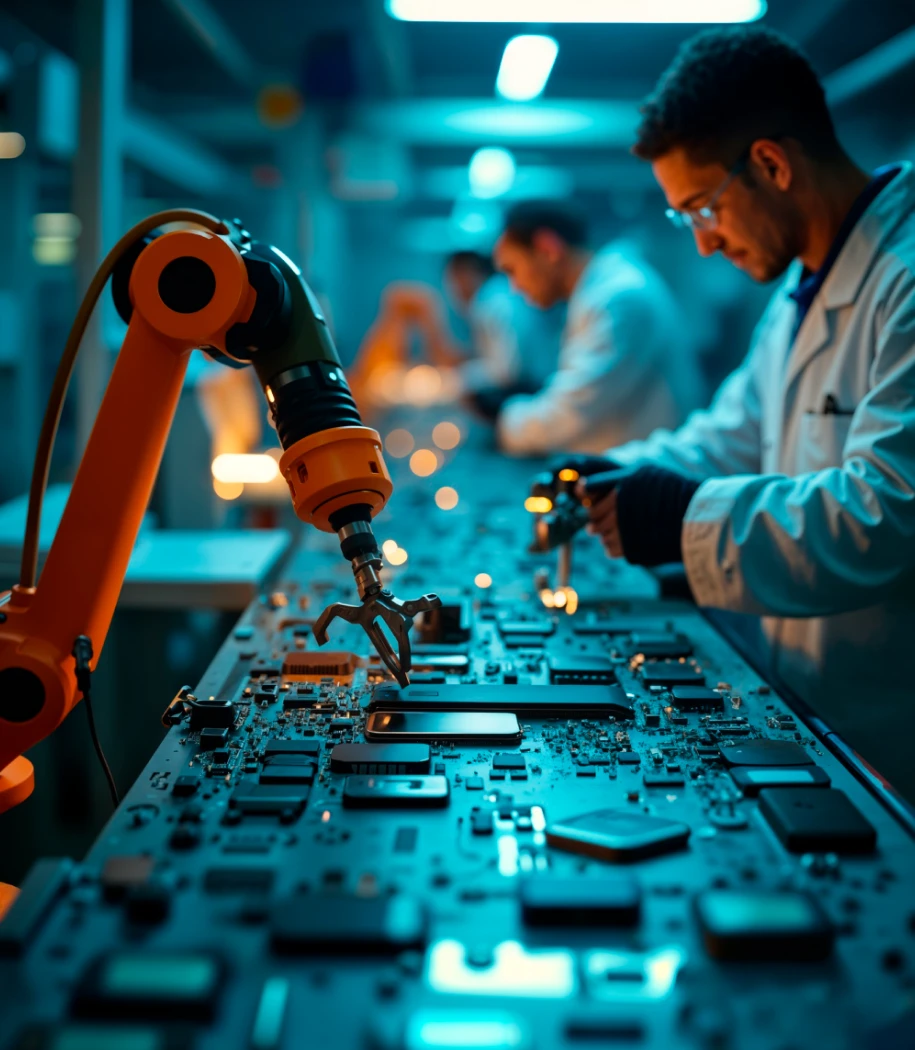
Manufacturing data carries real operational weight, from production records to supplier information, so access control and documentation practices are treated as part of the application design, not an afterthought.
Applications are structured to capture inspection records, non-conformance reports, and corrective actions in a format that supports quality documentation requirements.
Production, supplier, and employee data are handled with role-based access, encrypted storage, and clear data retention rules aligned with GDPR-style data protection principles.
Every work order, inventory movement, and quality check is logged with a timestamp and user record, so operations can be reconstructed during an audit or investigation.
Compliance in manufacturing software is mostly about consistent logging and access control, applied everywhere, not occasionally.
Operators, supervisors, and administrators see only the screens and data relevant to their role, reducing accidental changes to production records.
Single sign-on and multi-factor authentication integrate with existing enterprise identity systems instead of adding a separate login to manage.
Production, quality, and inventory data are encrypted in transit and at rest, with backups scheduled to prevent data loss during system failures.
Every integration with ERP, MES, or third-party systems runs through authenticated, rate-limited APIs to prevent unauthorized data access.
Handheld scanners, tablets, and factory floor devices are configured with device-level restrictions to limit exposure if a device is lost or stolen.
System activity is monitored continuously, so unusual access patterns or failed login attempts are flagged before they become a larger problem.
Detailed audit logs cover every change to production, quality, and inventory records, following the same we apply across every application we build.

Manufacturing software touches production, so the development process follows a structured path built around minimizing disruption to live operations, similar to the App Development Lifecycle Explained we follow across projects.
We spend time understanding how production actually runs today, including shift patterns, existing systems, and where manual work creates bottlenecks.
Requirements are documented against real production workflows, defining what the application needs to cover in the first release versus later phases.
We design the system architecture around ERP and MES integration points, data flow, and how the application will scale across additional plants if needed.
Interfaces are designed for factory floor conditions, including gloved hands, bright or dim lighting, and quick data entry during time-pressured tasks.
The application is built in stages, with core production and inventory features prioritized ahead of secondary reporting and analytics tools.
Testing includes real-world scenarios such as intermittent network connectivity on the floor and concurrent data entry from multiple stations.
After launch, we track how the application performs against production goals and refine workflows as operations or equipment change.

A short discovery call is usually enough to identify which part of your operation would benefit most from a connected application first.
Predictive maintenance, production forecasting, and quality inspection draw on the same operational data covered in AI in Manufacturing Industry Applications, applied to reduce unplanned downtime and rework.
Cost and timeline depend on factory complexity, the number of ERP or IoT integrations required, warehouse scope, user count, and how many plants the system needs to support.
8 to 12 weeks
A focused application covering one core workflow, such as production monitoring or inventory tracking, for a single facility.
For manufacturers with specific ERP systems, compliance requirements, or existing infrastructure that a standard plan does not cover.
Every manufacturing engagement starts with a discovery conversation before any pricing or timeline is finalized. .
We build around how production, maintenance, and warehouse teams actually work, not a generic app template adapted for manufacturing.
Experience connecting mobile applications to ERP, MES, and CRM systems means integration is planned from the start, not patched in later.
Predictive maintenance and quality inspection features are built on production data that already exists, so AI adds value without requiring a separate data project first.
Systems are architected to expand from one facility to several without requiring a rebuild each time a new plant comes online.
Cloud-based deployment keeps systems accessible across plants and reduces dependency on on-premise servers that are costly to maintain.
Manufacturing operations change as equipment and processes evolve, and we stay involved after launch to adjust the system as those changes happen.
Role-based access, audit logging, and data protection are built into every manufacturing application from the first release, not added after a security review.
As a Custom Software Development Company in Chennai, we work as a long-term technology partner, not a vendor that disappears after handover.
Be cautious of vendors who quote a manufacturing app without asking how your production, quality, or warehouse processes actually work to
Got Questions ?
We have the answers. Explore everything you need to know about Code Neptune’s services, process, and technology.
A manufacturing app development company builds software covering factory management, production monitoring, quality inspection, equipment maintenance, warehouse operations, and integrations with ERP or MES systems used to run a plant.
Yes. Manufacturing applications are commonly built to integrate with existing ERP and MES systems through APIs, so production, inventory, and financial data stay consistent across systems instead of requiring duplicate data entry.
Yes. Warehouse applications covering receiving, put-away, picking, and stock movement are a common part of manufacturing projects, often using barcode or RFID scanning for accuracy.
A focused single-workflow application can take 8 to 12 weeks, while a full multi-plant platform with ERP integration and AI features typically takes 6 to 9 months depending on scope.
Cost depends on how many workflows the system covers, whether it integrates with an existing ERP, how many facilities are involved, and whether AI features like predictive maintenance are included. A single-facility application typically starts at a lower range than a multi-plant enterprise platform.
AI is commonly applied to predictive maintenance, quality inspection, and demand forecasting in manufacturing, using existing machine and production data to flag issues earlier than manual monitoring typically allows.
Manufacturing platforms can be architected to support multiple plants from a single system, with centralized reporting and facility-level access control, though this typically requires enterprise-level architecture planning from the start.
Yes. Legacy manufacturing systems and spreadsheet-based processes are commonly modernized in phases, replacing manual steps with connected tools while production continues to run during the transition.
If you are weighing production workflows, enterprise integrations, automation goals, AI opportunities, warehouse operations, or future scalability, a conversation about your current setup is the most useful next step before development begins.
01
Let us know everything you want to achieve!
02
A quick, no-pressure call to understand your needs.
03
Enjoy transparent pricing with potential discounts!
Enquiry
Careers
+91 98416 00980Visit
No. 624, 3rd Floor – S2, Khivraj Building, Anna Salai, Chennai – 600 006


No. 624, 3rd Floor – S2, Khivraj Building, Anna Salai, Chennai – 600 006
Jobs :
careers@codeneptune.comEnquiry :
info@codeneptune.com