
Loading...

Construction firms manage sites, crews, contractors, equipment, and schedules simultaneously. Code Neptune, a Mobile App Development Company for complex operations, creates custom construction apps to unify workflows, boost field visibility, and scale across mobile, web, and enterprise platforms.


Connect project managers, site teams, contractors, equipment, materials, and business operations through purpose-built digital platforms.

Project schedules, task assignments, progress tracking, approvals, documents, and project visibility.

Site attendance, work orders, inspections, daily reports, task management, and field communication.

Equipment tracking, maintenance schedules, utilization monitoring, service records, and field visibility.

Mobile applications, dashboards, APIs, cloud infrastructure, analytics, and enterprise integrations.
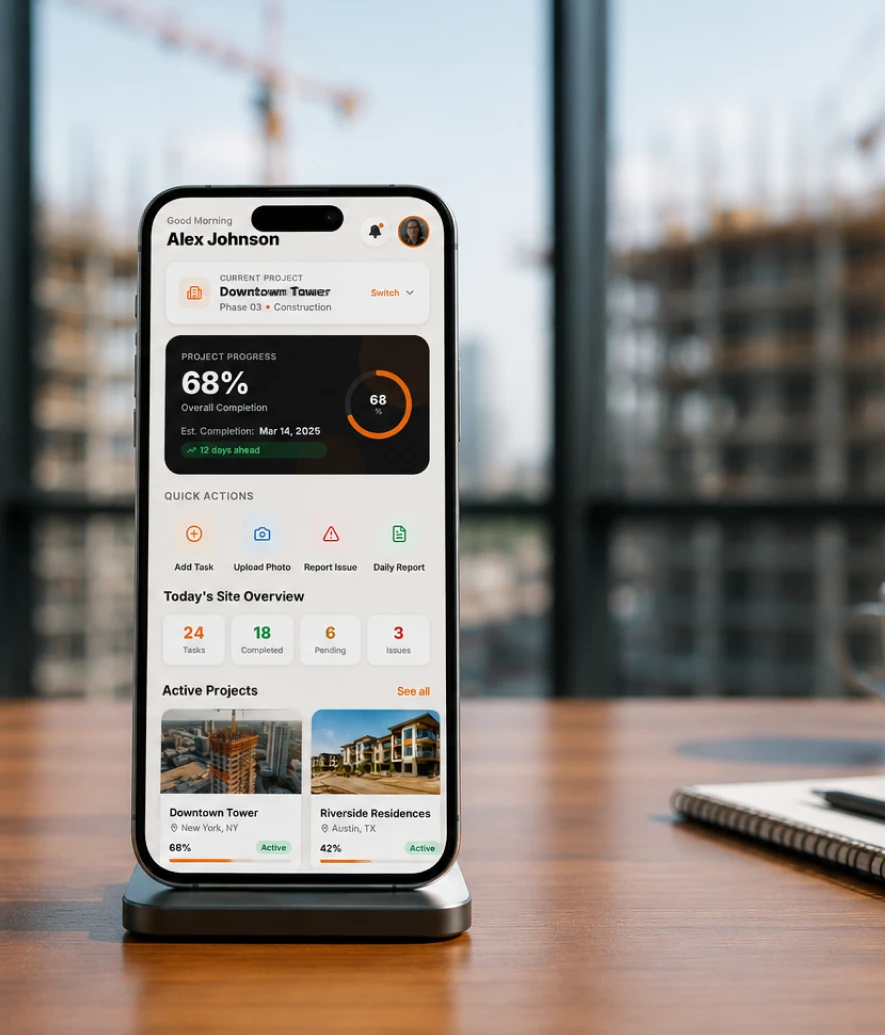
Construction software must address the entire operational environment, including apps, project management, enterprise platforms, equipment, field teams, and dashboards, not just the mobile interface
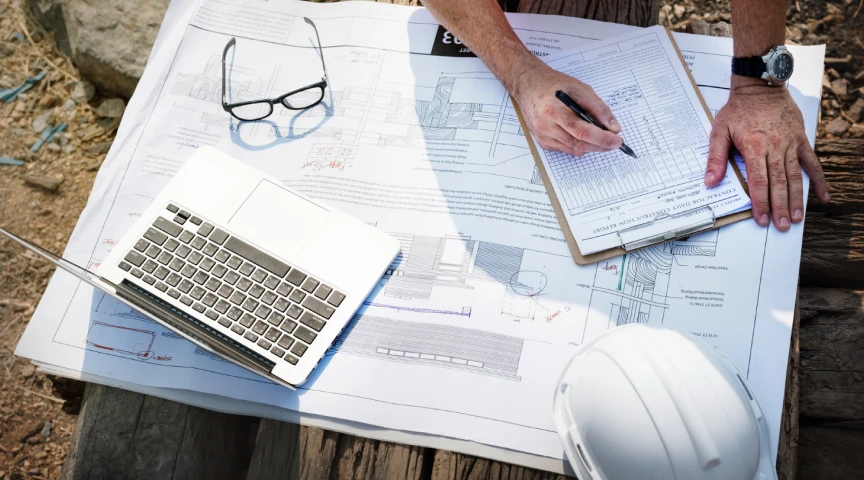
Map project workflows, site activities, workforce requirements, contractor processes, equipment operations, documentation, and business objectives before defining the product scope.
Develop purpose-built applications for contractors, site managers, engineers, field workers, project managers, and construction businesses around their operational requirements. Our team's custom mobile app development approach starts with the workflow, not the template.
Build connected enterprise applications for project management, workforce operations, equipment management, procurement, reporting, document workflows, and multi-project coordination.
Select native or cross-platform development according to field-device requirements, offline needs, performance expectations, project workflows, integrations, and long-term maintenance requirements. Our team works across iOS and Android app development, cross-platform builds, and native Android app development depending on what the field environment actually calls for.
Connect applications with project management platforms, ERP systems, CRM tools, GPS, equipment systems, procurement platforms, document services, APIs, and other business infrastructure.
Modernize legacy construction applications, improve field experiences, strengthen integrations, optimize performance, and continue evolving the platform as project and business requirements change.
Construction applications need to connect office teams with people and assets operating in the field. A digital platform that brings together project management, workforce coordination, equipment, materials, documentation, and site reporting removes the gaps that slow projects down.
Manage projects, tasks, schedules, milestones, approvals, documents, progress, and stakeholder communication.

Support site teams with work orders, inspections, daily reports, task assignments, issue tracking, and field communication.

Manage contractors, assignments, documentation, communication, project participation, and operational workflows.

Support project estimates, cost calculations, material requirements, quotations, and estimation workflows.

Manage worker assignments, attendance, schedules, task allocation, productivity, and field communication.

Track equipment, maintenance, utilization, service schedules, locations, and operational availability.

Support inspections, incident reporting, safety checklists, documentation, site observations, and corrective actions.

Connect project information with dashboards, reports, analytics, performance metrics, and management insights.

Discuss your project operations, workflows, equipment needs, and security goals before development begins.

Construction applications can handle employee information, project documents, financial records, contractor details, site information, equipment data, and operational records. That calls for appropriate access controls, data protection, monitoring, and operational governance built in from the start.
Apply appropriate data handling, access controls, privacy considerations, and retention practices according to the project's scope and applicable requirements.
Separate permissions between workers, contractors, project managers, site supervisors, administrators, and other authorized users.
ity Use appropriate activity logs, reporting, workflow records, and system monitoring to improve visibility across construction operations.
Construction security requirements get mapped to the project's users, data, systems, field environment, and applicable business requirements rather than treated as a generic checklist.
Separate permissions for project managers, contractors, workers, supervisors, administrators, and other users based on their responsibilities.
Protect employee, contractor, and administrator accounts through appropriate authentication, session management, and access controls.
Protect project documents, workforce information, financial records, equipment data, site information, and operational records through appropriate application and infrastructure controls. Read more about our .
Protect communication between mobile applications, project management systems, ERP platforms, equipment services, databases, and third-party APIs.
Support reliable synchronization, offline workflows, data validation, and operational continuity for construction teams working in variable connectivity environments.
ptimize application responsiveness, API communication, media handling, resource usage, and performance across field devices and office environments.
Use controlled access, monitoring, protected services, backups, and scalable infrastructure for construction applications and enterprise systems.

Construction applications need to account for project workflows, field environments, workforce requirements, equipment, documentation, integrations, security, and operational reliability before deployment.
Understand project structures, site operations, workforce requirements, contractor workflows, equipment usage, documentation, and business objectives.
Prioritize essential workflows, define the product scope, establish technical requirements, and create a practical development roadmap.
Design clear experiences for site workers, project managers, contractors, engineers, and administrators while considering device conditions, field environments, and usability.
Develop mobile applications, backend services, APIs, dashboards, integrations, offline capabilities, and supporting platform components.
Validate workflows, device compatibility, offline synchronization, integrations, security, reliability, and performance under realistic construction conditions.
Prepare the application for deployment and connect it with approved project management, ERP, CRM, equipment, document, notification, and operational systems.
Monitor application performance, collect field feedback, improve workflows, strengthen security, and expand functionality as construction operations evolve.

Bring your project structure, field operations, workforce requirements, equipment needs, integrations, and long-term product goals to a structured discussion
Manage projects, tasks, schedules, equipment, and reporting. Warehouse workflows serve as a contextual reference, not a primary construction topic
The investment depends on project complexity, field workflows, user roles, offline capabilities, equipment integrations, enterprise systems, document management, security, and scalability requirements.
3–5 months
Suitable for a focused construction workflow, field application, or initial construction technology MVP.
For construction platforms requiring specialized project workflows, equipment integrations, AI capabilities, enterprise systems, or phased development.
Timelines are indicative planning ranges. The final delivery estimate depends on technical discovery, integrations, user roles, and product scope.
Evaluate whether the team can understand project management, site operations, workforce coordination, contractor workflows, equipment, materials, and inspections
Look for experience developing reliable mobile experiences for field workers, project managers, contractors, engineers, and business teams
Assess experience connecting applications with ERP, CRM, project management systems, databases, procurement platforms, document systems, and APIs
Construction teams often operate in locations with inconsistent connectivity. Evaluate the application's offline workflows, synchronization, and field reliability
The development partner should demonstrate structured practices around authentication, access control, API security, project data protection, and monitoring
The platform should support growing projects, workers, contractors, equipment, documents, locations, and operational data
Consider whether the architecture can support predictive maintenance, project intelligence, safety analysis, material planning, and operational analytics as the platform evolves
Clarify source-code ownership, documentation, deployment access, technical handover, maintenance, and long-term control of the construction platform
Be cautious of providers that offer generic mobile applications without understanding construction workflows, field conditions, offline requirements, project management, equipment, enterprise integrations, security, or long-term scalability
Got Questions ?
We have the answers. Explore everything you need to know about Code Neptune’s services, process, and technology.
A Construction App Development Company can build project management applications, field management platforms, contractor systems, workforce applications, equipment management apps, estimation solutions, inspection platforms, and construction analytics products.
Yes. Construction applications can be designed with offline workflows and synchronization so field teams can keep working when connectivity is limited, depending on the application's technical requirements.
Yes. AI can support project delay prediction, safety analysis, predictive equipment maintenance, document classification, material planning, progress analysis, and operational insights where the data and use case support it.
A focused construction application may need several months, while larger platforms involving enterprise integrations, equipment systems, multiple workflows, and advanced analytics can take substantially longer. The actual timeline follows discovery and technical scope.
The cost depends on project workflows, user roles, offline capabilities, integrations, equipment systems, security, dashboards, and expected scale. A discovery process establishes the scope before estimating the investment.
Yes. Construction applications can integrate with approved ERP, CRM, project management, procurement, document management, equipment, database, and third-party systems through available APIs and integration mechanisms.
Yes. Applications can support equipment tracking, maintenance schedules, service records, utilization, location information, assignments, and operational reporting.
Yes. Existing platforms can be modernized through improved mobile experiences, API architecture, cloud infrastructure, performance optimization, security improvements, offline capabilities, and phased product development.
Whether developing a field, project, equipment, contractor, or connected construction app, begin by defining workflows, field needs, integrations, security, and the roadmap.
01
Let us know everything you want to achieve!
02
A quick, no-pressure call to understand your needs.
03
Enjoy transparent pricing with potential discounts!
Enquiry
Careers
+91 98416 00980Visit
No. 624, 3rd Floor – S2, Khivraj Building, Anna Salai, Chennai – 600 006


No. 624, 3rd Floor – S2, Khivraj Building, Anna Salai, Chennai – 600 006
Jobs :
careers@codeneptune.comEnquiry :
info@codeneptune.com